
A tabletop exercise (TTX) is a discussion-based simulation in which campus stakeholders walk through realistic emergency scenarios - from natural disasters to cybersecurity incidents - in a low-stress, collaborative setting. The goal is not to deploy first responders or mobilize real resources, but rather to discuss what would be done: who calls whom, which protocols are triggered, how communication flows, and where the plan might break down. Unlike full-scale drills or live-action simulations, tabletop exercises are cost-effective, flexible, and accessible - making them especially attractive for institutions of higher education. As the REMS (Readiness and Emergency Management for Schools) guide puts it, TTXs are “ideal starting points for schools and colleges to evaluate emergency management plans.”
Over the past decade, many colleges and universities have used tabletop exercises to refine their emergency planning. For example, the team at the University of North Carolina at Chapel Hill (UNC-Chapel Hill) recently conducted a campus-wide exercise simulating an explosion, then used it to identify gaps and enhance their response and recovery protocols.
Low-cost, high impact: Because TTXs require only discussion - no evacuations, no role-playing of first responders, no physical logistics - they represent one of the most resource-efficient ways to assess emergency preparedness.
Uncovering hidden gaps before crisis strikes: Tabletop exercises often reveal deficiencies that aren’t obvious on paper. These might be communication breakdowns, unclear lines of authority, or missing resources that only become visible when staff are confronted with “what-if” scenarios.
Improving cross-departmental coordination: On a college campus, emergencies rarely affect only one department, including residence life, facilities, security, student affairs, IT, communications, and legal. TTXs bring all relevant stakeholders together, enabling them to discuss coordination, collaboration, and decision-making across silos.
Promoting critical thinking and better decision-making under pressure: Even though a tabletop exercise is not “real,” it can approximate the stress of a crisis by forcing teams to make decisions under time pressure and with limited information - a valuable rehearsal of real-world thought processes.
Scalable & repeatable for evolving risks: As campuses grow or face new threats (e.g. cybersecurity, extreme weather, public health), TTXs can be repeated regularly with different scenarios - enabling continuous improvement, adjustment of plans, and training of new staff. How to Design and Conduct an Effective Tabletop Exercise
Successful exercises don’t happen by accident - they require planning, structure, and follow-through. Here’s a step-by-step approach based on best practices from current emergency-management literature:
It’s important to acknowledge that tabletop exercises are not a panacea. Because they are discussion-based and low-stress, they may not fully capture operational constraints - like logistics, timing, physical response capacity, or emotional pressure under real threat.
Moreover, if not properly facilitated or documented, they can devolve into hypothetical discussions with little accountability or concrete follow-up. That’s why it’s essential to treat TTXs as a living process: planning them carefully, involving all relevant stakeholders, documenting outcomes, and committing to implement corrective actions.
College and universities are not like corporations or municipal governments: they are often sprawling, decentralized, with multiple buildings, student housing, varied use-cases (research labs, dorms, athletics, dining services, often 24/7 operations), and a complex mix of populations - students, faculty, staff, visitors.
In that environment, planning for emergencies isn’t just about “what does the fire alarm do,” but “who communicates with students, staff, parents, media; how do we protect sensitive data; how do we coordinate with external agencies; how do we maintain operations while staff and students are displaced; how do we manage reputational risk.” A well-executed tabletop exercise gives these complex stakeholders a safe environment to think through such real-world complications - long before an actual emergency strikes.
What’s more, as institutions face evolving risks (climate change, cybersecurity threats, public health, etc.), TTXs offer a flexible, scalable, and repeatable mechanism to test readiness across different kinds of hazards.
If you’re ready to run your first tabletop exercise, start simple: pick a plausible scenario, assemble the right team, set clear objectives, facilitate a frank discussion - then document what you learn and act on it. Over time, build a schedule of regular exercises to stay ready.
That said, manually running and tracking these exercises can get complicated - especially as campuses scale, plans evolve, or staffing changes. That’s where an organized, purpose-built solution can make a difference. For instance, Kuali Ready offers cloud-based, role-aware business continuity planning (BCP) that helps institutions:
If you want to ensure that lessons from your tabletop exercises don’t get lost in spreadsheets, meetings, or silos - and that your campus maintains readiness no matter who’s on staff or what risks emerge - a purpose-built BCP tool like Kuali Ready might be the next logical step.
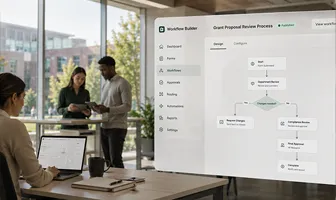
Discover how Kuali connects the work behind administration, research, compliance, IT, and more.
Explore Kuali solutions ->.jpeg)
Explore business continuity plan examples and learn how universities ensure operational resilience with proactive strategies for crisis management and recovery.
Discover a streamlined, four-phase continuity planning approach for higher education—covering BIA, risk analysis, plan development, exercises, and maturity benchmarking—to embed resilience and streamline recovery efforts.

When colleges close, the economic, social, and educational impacts ripple through communities. Learn how business continuity planning protects campuses, students, and local economies.