

Searching for a modern curriculum management solution can feel more overwhelming than ever. Institutions are being asked to support flexible learning models, micro-credentials, multilingual offerings, guided pathways, and accelerated time-to-degree - all while faculty bandwidth is stretched and administrative teams are juggling legacy systems. The right software doesn’t just help you manage change: it helps you transform how your institution designs, governs, and publishes its academic offerings.
In this article, we revisit five key attributes to look for in a curriculum management system - and why each matters more now than ever. Then we’ll highlight how a purpose-built platform can help you stay ahead of complexity while empowering stakeholders across the institution.
A system with a UI that feels intuitive, responsive, and streamlined makes all the difference. When faculty and staff can navigate with ease - minimal clicks, smart defaults, clear status indicators - you see higher adoption, fewer tickets, and fewer workarounds. In practice, that means less training time for users who may only access the system intermittently, and fewer opportunities for human error when gathering critical input.
Why this matters now: With institutions offering more modalities (hybrid, online, accelerated) and curricular updates happening across campuses and departments, you can’t assume every user is a frequent system power user. Systems must support first-time or occasional users without causing frustration.
Changes to one course can ripple across dozens of programs, prerequisites, corequisites, and catalog listings. A system that tracks dependencies and surfaces gaps before they manifest prevents students from encountering registration or degree audit dead ends.
Why this matters now: Graduation and retention metrics remain under pressure. A recent synthesis of curriculum-alignment research found that curricular misalignment is one of the strongest predictors of delayed graduation and poor learning outcomes, particularly when prerequisite structures are unclear or inconsistently applied. This research reinforces the value of a tool that automatically identifies dependency gaps before students encounter them - reducing registration barriers and improving the overall learning pathway.
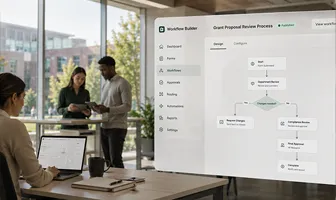
Faculty and academic administrators rarely follow a one-size-fits-all process. The more configurable your system - from conditional form fields to workflow routing logic to on-demand reporting - the more the system conforms to your institution rather than forcing you to adapt your process.
Why this matters now: The speed of change in higher ed (new program stacks, micro-credentials, competency-based offerings) means you need agility. A rigid form or static workflow that worked five years ago may not keep pace today. And you’ll want built-in data and dashboards to surface trends for accreditation, program review, or strategic planning.
Managing separate systems for curriculum development and catalog publication creates inefficiencies and risks. Ideally, a single system or tightly integrated solution will allow approved curriculum changes to flow automatically into your catalog and to publish consistently across web, print, and mobile outputs.
Why this matters now: Students and advisors expect real-time, accurate information about courses and programs. According to a recent blog by Kuali, manual catalog entry at one institution took roughly 18 days per year, time that could be spent on analysis rather than data entry. Automating catalog publication reduces errors, enhances the student experience, and frees staff to focus on strategic initiatives.
Your curriculum system should not exist in a vacuum. It should integrate with your Student Information System (SIS), learning management system (LMS), advising/degree-audit systems, as well as enterprise reporting tools. Integrations help you maintain data alignment, reduce duplicate work, and build a comprehensive view of curriculum impact across the student lifecycle.
Why this matters now: State and national policy groups are placing greater emphasis on measurable student outcomes, time-to-degree, and credential attainment. The National Conference of State Legislatures’ 2024 Trends in Higher Education report highlights how institutions that leverage integrated data systems are better able to diagnose barriers to completion and respond proactively to shifts in enrollment, workforce needs, and academic performance. Integrations across the curriculum, SIS, LMS, and advising tools provide the complete picture needed to meet these expectations, enabling institutions to align curriculum management with their student success and policy-driven goals.
Taken together, these five attributes help your institution modernize its academic operations in ways that go beyond merely “managing curriculum.” You’ll be better positioned to:
If your institution is looking to modernize the way curriculum, catalog, and academic policies are created, governed, and published, Kuali Academic Operations offers a cloud-native platform built specifically for higher education. It brings together configurable workflows, real-time catalog publishing, curriculum governance, and robust analytics to help academic leaders create more agile and student-centered processes. You can reference the eBook on Higher Education’s Guide to Curriculum Management Software for more information.
For institutions that want to extend this accuracy and alignment directly into the student experience, Kuali Advisor complements this ecosystem by delivering real-time, dynamic degree pathways. Advisor provides instant degree audits, accurate course recommendations, and visibility into student progress based on up-to-date curricular data. When curriculum management and degree planning tools are in sync, students receive more precise guidance, advisors spend less time on manual checks, and administrators gain a clearer picture of how curricular decisions impact completion outcomes.
Together, these solutions help institutions create a continuous, connected academic lifecycle - from curriculum design to catalog publication to personalized student guidance - supporting both operational efficiency and student success.
Discover how Kuali connects the work behind administration, research, compliance, IT, and more.
Explore Kuali solutions ->
Bow Valley College leveled up their paper-based curriculum and catalog processes with Kuali Student, a digital curriculum and catalog management suite, to reduce errors, increase transparency, and save time. With Kuali Student, Bow Valley saves 100 hours each curriculum and catalog cycle.

Explore why UX design is essential in curriculum and catalog management software for higher education, improving usability, adoption, and operational efficiency.

Today’s students expect up-to-date, searchable course catalogs that help them plan and graduate on time. This article breaks down why legacy systems fall short, highlights new tech and trends reshaping higher ed, and explores how Kuali Academic Ops—with Ad Astra—delivers a smarter, integrated solution for curriculum, scheduling, and success.