
Research administration continues to evolve in complexity and scale. Administrators now navigate a landscape where institutions secure significant external funding, manage multilayered compliance demands, and rely on robust documentation. In this context, forms and approvals remain central - they enable data capture, route essential decisions, and provide audit trails for regulatory oversight. Yet despite their importance, form and approval processes often remain pain points.
Back in 2019, a study by the Society of Research Administrators International (SRAI) explored how research offices use forms and found that many were used for compliance (56%) or internal approvals (42%), yet users often found the workflows burdensome. Since then, complexity has only grown. New federal data-sharing policies, updated NIH Data Management & Sharing requirements, and increased audit scrutiny have made digital workflows more important than ever.
1. Lack of clarity and user-friendliness
Researchers and administrators often report that forms are confusing: instructions can be dense or full of jargon. The 2019 SRAI study highlighted that unclear routing and instructions delayed submissions. As federal requirements expand - for example, those under the Uniform Guidance (2 CFR 200) - the risk that forms become even more complex grows.
2. Minimal collaboration in form design
Only 28% of institutions in the SRAI study described their form-creation process as collaborative. Without end-user input (PIs, department admins), forms are often inefficient from the start.
3. Poor distribution methods and manual routing
Historically, about 41% of forms were still routed by email or PDF. Although eRA systems and digital workflow tools are more common now, many research offices still rely on patchwork solutions. Manual routing lacks transparency - where a form is in the queue - and increases audit risk.
4. Redundancy, delays, and audit risk
Duplicated data entry, multiple versions of the same form, and inconsistent approval trails all create bottlenecks. When award setup or compliance documentation lags, research progress slows.
Clarify form instructions and design with users in mind.
A well-designed form uses accessible language, field-level help, and conditional logic (skip questions that don’t apply). User testing before rollout improves adoption and reduces errors.
Collaborate early and broadly.
Involving research administrators, compliance officers, and departmental staff ensures the workflow mirrors real-world processes.
Adopt modern, auditable digital workflows.
Moving away from PDF/email toward centralized systems brings visibility dashboards, automatic notifications, and timestamped audit logs - essentials for compliance and efficiency.
Standardize and track metrics.
Maintain a central library of form templates, standard routing logic, and measure metrics such as average approval time, rejection rates, and user satisfaction.
Recent data from the Council on Governmental Relations (COGR) shows that campuses investing in electronic research administration (eRA) tools reduce cycle times and improve audit readiness.
Why Now Is the Time
Modernizing forms and approvals isn’t just operational - it’s strategic for research excellence and compliance integrity.
The challenges around research forms and approvals aren’t unique - nearly every institution grapples with the same mix of manual routing, unclear processes, and redundant data entry. What separates leading universities today is how they’ve modernized those workflows.
Kuali Research brings together proposal, award, and compliance management in one integrated, cloud-based system built specifically for higher education. Its no-code form builder and workflow automation tools empower research offices to design and manage their own processes - without waiting on IT.
Instead of juggling PDFs and email threads, administrators can:
The result is faster turnaround, cleaner data, and greater transparency across the research lifecycle - from pre-award routing to post-award compliance.
To see how this approach supports both efficiency and onboarding, explore Kuali’s Grant Administrator Onboarding Guide: Training New Research Admin Staff
You can also learn more about Kuali Research at https://www.kuali.co/products/research.
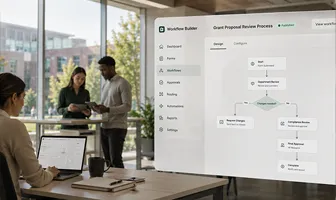
Discover how Kuali connects the work behind administration, research, compliance, IT, and more.
Explore Kuali solutions ->%2520(1).jpeg)
Without a centralized research administration system, Portland State University relied on shadow systems, individual tracking methods, and manual communication to keep research moving. By implementing Kuali Research, the university gained greater transparency, automated workflows, and a connected view of research operations across the institution.

Learn how to enable regular business users to create powerful research administration forms and workflow processes without relying for IT. Read more here.
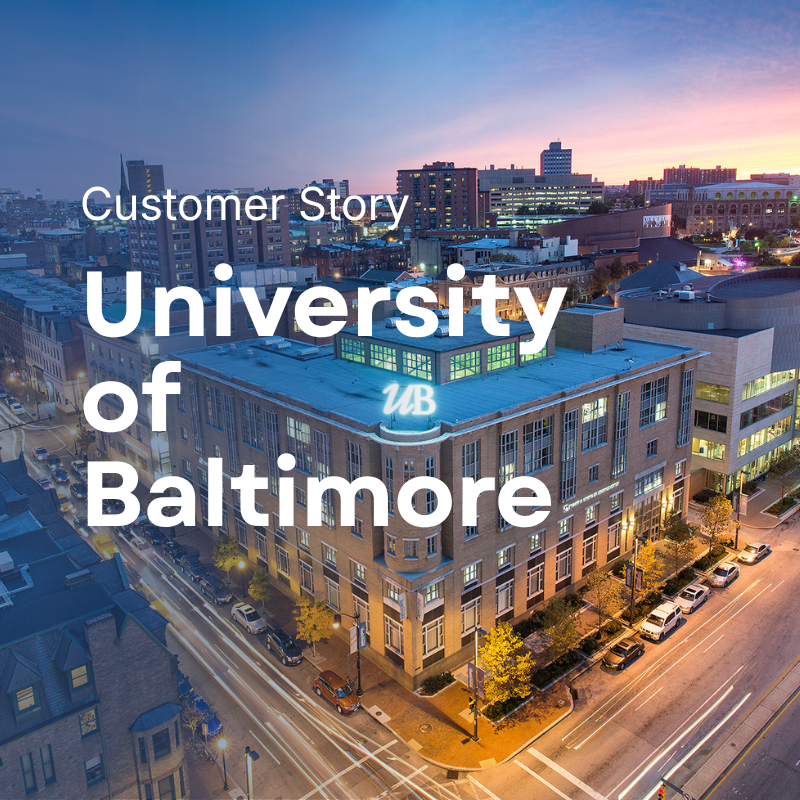
The University of Baltimore replaced paper-based research administration with connected digital workflows that improved visibility, accelerated approvals, and reduced administrative burden. By implementing Kuali Research, the university transformed proposal development, awards management, and compliance processes into a faster, more transparent experience for researchers and administrators alike.…