

At Arkansas State University (A-State), Kuali Reach connects students with academic support while giving tutors more flexibility and administrators better insight into how services are being used. For Learning Support Services (LSS), that means making it easier to support more students while running tutoring more efficiently. Learn how Arkansas State University uses Kuali Reach (formerly Penji) to make tutoring easier to access while improving scheduling, staffing efficiency, and visibility across campus.
Fayetteville, Arkansas
Public research university
Approximately 34,000 students
Kuali Reach (formerly Penji)
Learning Support Services is one of seven tutoring centers at Arkansas State and one of the most widely used academic support spaces on campus. The center supports everything from general education courses such as college algebra, philosophy, and history to upper-level courses in engineering, mathematics, chemistry, biology, exercise science, and other disciplines.
Its tutoring staff is made up entirely of students, which means available subjects can change from semester to semester depending on who is on staff. Today, the broader campus tutoring network uses Kuali Reach, along with additional student-facing departments that need to track attendance and engagement. But Reach’s presence across A-State started with LSS. The team initially needed to solve two fundamental problems: understanding how students were using tutoring and finding a better way to schedule it.
Reach gave A-State a way to address both—and created a foundation that other programs could adopt as they saw what was possible.
Before Reach, LSS had limited visibility into tutoring activity. Its university-built system could track when students checked in and out, but not easily connect visits to specific tutors, courses, or faculty members. That made it difficult to understand demand, usage patterns, and who was receiving support.
Scheduling was another challenge. LSS primarily relied on drop-in tutoring, which meant tutors could spend significant portions of scheduled shifts waiting for students. A-State needed a more efficient way to connect students with help while gaining the data to understand demand, support faculty, and make better decisions about its services.
With Kuali Reach, LSS shifted toward an appointment-based model that gives students an easier way to find support and tutors more control over their schedules.
Students can schedule tutoring themselves through their phones or Canvas, without having to contact a faculty member, staff member, or tutor first. Reach is also introduced early in the student experience, with first-year instructors, advisors, and New Student Orientation encouraging students to download the app so support is only a few clicks away when they need it.
For tutors, the model offers similar flexibility. Student employees set their own availability, allowing them to fit tutoring around classes, research, internships, and other commitments. And because LSS primarily pays tutors when students actually book sessions, the center can hire qualified tutors across more courses without taking on the same fixed staffing costs associated with scheduled drop-in shifts.
The impact has been significant. Over the past three years, LSS has increased its tutoring efficiency by approximately 300%—paying less per tutoring hour while helping more students. Reach also gives A-State data it can put to work. Each week, LSS pulls tutoring activity for specific math and chemistry courses and shares it with faculty. Monthly reporting tracks tutoring sessions and unique student counts across participating centers, while semester and annual reporting gives university leadership a broader view of academic support activity. Because A-State has tracked this data over multiple years, the team can also see how demand is changing over time and use those insights to better understand the reach of its services.
Kuali Reach has helped Arkansas State create an academic support model that is easier for students to access and more efficient for administrators to operate.
The university has:
For A-State, the appointment-based approach has made tutoring more efficient. LSS can offer more availability and primarily pay tutors when students actually book sessions, giving students more options without staffing costs growing at the same rate. Tutors also get the flexibility to set their own availability and spend their working time helping students.
Reach’s impact has expanded beyond LSS as well. As other departments have seen the platform in use, more programs have adopted it for tutoring, attendance, and student engagement. Because Reach is already integrated into A-State’s environment, those programs can join the broader campus setup rather than introduce another disconnected tool. What began as a solution to LSS’s scheduling and data challenges has grown into a more connected approach to student support across A-State.
Academic support leaders are constantly balancing two priorities: making help available when students need it and using limited resources responsibly. Arkansas State University has found a way to do both. With Kuali Reach, students have a simple path to academic support. Tutors have the flexibility to work around their own schedules. Administrators have the data to understand demand and report on impact. And tutoring centers can make staffing decisions based on how students actually use their services.
For A-State, that means helping more students without requiring costs and administrative complexity to grow at the same pace. And as more programs across campus have seen what Reach can do, the model has continued to spread.
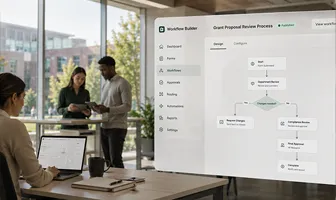
Discover how Kuali connects the work behind administration, research, compliance, IT, and more.
Explore Kuali solutions ->
At Pima Community College, tutoring spans six campuses—five physical and one virtual. With Kuali Reach, Pima has made it easier for students to find support while giving its learning centers a simpler way to track activity, understand demand, and manage resources across locations. For Pima, the time saved isn’t just an operational benefit. It creates more capacity to focus on the work that directly supports students. Learn how Pima Community College uses Kuali Reach (formerly Penji) to simplify tutoring for students, reduce manual reporting, and make smarter staffing decisions across its learning centers.
Effective academic support depends on connecting students with the right resources at the right time. But as programs grow, disconnected scheduling tools, databases, and manual processes can make it difficult for staff to see the full picture. At Duke University, the Academic Resource Center (ARC) supports students through peer tutoring, learning consultations, and programs like SAGE (Student…
At the University of Central Missouri (UCMO), making academic support accessible means creating an experience that works for everyone involved. Students need an easy way to find help, tutors need flexibility to manage their schedules, and administrators need clear information to understand how their services are being used. Kuali Reach brings those pieces together. With an easy-to-use experience…