

You’ve selected your curriculum management solution, aligned stakeholders, and cleared procurement hurdles - now comes the most important phase: implementation. In higher education, implementation is not just a technical rollout; it’s a transformation of how academic programs are designed, approved, and continuously improved.
Curriculum management today is far more complex than simply updating course catalogs. It is a multi-layered, collaborative process that involves aligning academic goals with real-world demands, coordinating across departments, and ensuring long-term program relevance. At the same time, institutions are under increasing pressure to modernize operations, improve student outcomes, and adapt quickly to change. When implementation is done well, it creates a strong foundation for all of this. When it’s not, inefficiencies and misalignment can persist for years.
So how can institutions set themselves up for success from day one? The answer lies in a more modern, strategic approach to implementation - one that blends governance, collaboration, and technology.
Setting expectations still matters, but today it must go beyond simple roles and responsibilities. Successful implementations begin with alignment across academic, administrative, and technical stakeholders.
Curriculum development is inherently collaborative - no single person or department can fully represent the needs of students, faculty, and the broader institution. That means early conversations should focus on:
Equally important is transparency. Institutions should openly share competing priorities - like accreditation cycles, catalog publishing deadlines, or LMS implementations - so the rollout plan reflects reality. This reduces friction later and helps maintain momentum.
Defining scope is still a core best practice, but modern implementations require flexibility alongside structure.
Curriculum management is not a one-time project - it’s an ongoing cycle of design, implementation, monitoring, and revision. Because of this, scope should be treated as a living framework that evolves as the institution learns more about its processes and needs.
A strong scope should account for:
Revisiting scope regularly ensures the system continues to align with institutional goals, rather than becoming a rigid constraint. This is especially critical as institutions adapt to new delivery models, regulatory changes, and student expectations.
One of the most common challenges in implementation isn’t technical - it’s human. Faculty resistance, unclear ownership, and inconsistent adoption can derail even the best-designed systems.
Research consistently shows that stakeholder involvement is one of the most important drivers of successful curriculum management. When faculty, administrators, and staff are engaged early, they are far more likely to support and adopt the system.
This means institutions should:
It’s also important to frame the system as a tool that supports academic work - not one that adds administrative burden. When users see how it improves transparency, reduces redundancy, and streamlines approvals, adoption follows more naturally.
Modern curriculum management is increasingly data-driven. Implementation should not only digitize workflows - it should unlock insights.
Effective institutions build reporting and analytics into their implementation strategy from the beginning. This includes tracking:
Data-driven decision-making helps institutions continuously improve their curriculum and respond to evolving needs. It also plays a critical role in accreditation, where clear documentation and evidence of continuous improvement are essential.
Implementation is not the finish line - it’s the starting point of an ongoing process.
Strong curriculum management systems support a continuous cycle of evaluation and refinement. This includes gathering feedback, analyzing outcomes, and making iterative updates to programs and processes.
Institutions that embrace this mindset are better equipped to:
In other words, the goal isn’t just to implement a system - it’s to build a sustainable framework for long-term academic innovation.
Perhaps the most important shift in modern implementations is the role of the vendor. Today, institutions don’t just need software - they need a partner who understands higher education and can guide them through complexity.
A strong partner brings:
This partnership becomes especially valuable as institutions scale, refine processes, and expand their use of the system over time.
Higher education is evolving rapidly, and curriculum management sits at the center of that change. Institutions that approach implementation strategically - focusing on collaboration, flexibility, data, and continuous improvement - are far better positioned to succeed.
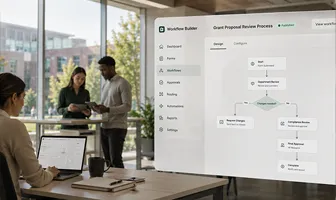
For institutions looking to modernize their approach, purpose-built solutions like Kuali Curriculum Management are designed specifically for the realities of higher education. With configurable workflows, intuitive form-building, and seamless integration capabilities, Kuali helps institutions streamline governance while maintaining the flexibility they need to adapt and grow.
Discover how Kuali connects the work behind administration, research, compliance, IT, and more.
Explore Kuali solutions ->
Bow Valley College leveled up their paper-based curriculum and catalog processes with Kuali Student, a digital curriculum and catalog management suite, to reduce errors, increase transparency, and save time. With Kuali Student, Bow Valley saves 100 hours each curriculum and catalog cycle.

Explore why UX design is essential in curriculum and catalog management software for higher education, improving usability, adoption, and operational efficiency.

Today’s students expect up-to-date, searchable course catalogs that help them plan and graduate on time. This article breaks down why legacy systems fall short, highlights new tech and trends reshaping higher ed, and explores how Kuali Academic Ops—with Ad Astra—delivers a smarter, integrated solution for curriculum, scheduling, and success.