

Higher education institutions are under increasing pressure to do more with less. Administrative teams are expected to support growing student populations, meet compliance requirements, and manage complex workflows - all while operating within constrained budgets. Yet many institutions still rely on manual, fragmented processes that slow work down instead of enabling it.
It’s not uncommon to see staff moving data between spreadsheets, chasing approvals over email, or managing paper-based forms. These inefficiencies don’t just waste time - they limit an institution’s ability to focus on higher-value work like student support, research advancement, and strategic planning.
Process improvement offers a path forward. By systematically evaluating and optimizing workflows, institutions can reduce administrative burden, improve accuracy, and create more scalable operations. Research from EDUCAUSE shows that process optimization and digital transformation in higher education can significantly improve efficiency, reduce costs, and enhance service delivery.
Below are four key steps institutions can take to build more effective, sustainable processes.
Process improvement doesn’t begin with technology - it begins with people. Subject matter experts (SMEs), the individuals performing tasks day-to-day, have the most accurate understanding of how work actually gets done.
Engaging these stakeholders early helps uncover hidden inefficiencies, workarounds, and bottlenecks that may not be visible at a leadership level. It also ensures that improvements align with real operational needs rather than theoretical workflows.
In higher education, where processes often span multiple departments, involving the right people is critical. Advisors, administrators, faculty, and compliance teams may all interact with the same workflow in different ways. Capturing these perspectives creates a more complete and accurate picture of the process.
Once the right stakeholders are identified, the next step is to document the process in a clear, visual way. Process mapping helps institutions move from assumptions to clarity.
By outlining each step - from initiation to completion - teams can identify:
This step is particularly important before introducing automation. Automating a flawed process does not eliminate inefficiency - it amplifies it. A well-mapped process ensures that any improvements are built on a solid foundation.
After mapping the process, institutions can begin identifying areas of waste and inefficiency. Many of these issues are deeply ingrained in day-to-day operations and often go unquestioned.
A common framework used in process improvement is Lean methodology, which focuses on eliminating non-value-added activities. In higher education, this often includes:
Studies show that applying Lean principles in higher education can significantly improve administrative efficiency and reduce turnaround times for key processes (sciencedirect.com).
By addressing these inefficiencies, institutions can streamline workflows and free up staff to focus on more strategic, value-driven work.
Process improvement is not a one-time project - it’s an ongoing effort. The most effective institutions adopt an iterative approach, making continuous, incremental improvements over time.
These improvements often fall along a spectrum:
Empowering teams to act on quick wins is especially important. When staff can make improvements without waiting on extensive resources or approvals, momentum builds—and process improvement becomes part of the organizational culture.
One of the biggest barriers to process improvement in higher education is reliance on disconnected tools and manual workflows. Paper forms, spreadsheets, and email-based processes make it difficult to maintain consistency, visibility, and accountability.
Modern institutions are increasingly turning to digital solutions that centralize workflows, automate repetitive tasks, and integrate with existing systems. These platforms enable administrators to build and adapt processes without heavy technical dependency, making it easier to respond to changing needs.
A practical example of this shift can be seen in how institutions are reducing administrative burden and improving efficiency through digitization. By replacing manual processes with streamlined, digital workflows, institutions can improve accuracy, reduce delays, and create a more responsive operational environment.
Effective process improvement in higher education requires alignment between people, processes, and technology. It’s not just about fixing inefficiencies - it’s about creating systems that can evolve over time.
Institutions that succeed in this area tend to:
As administrative demands continue to grow, the ability to improve and adapt processes will become increasingly important.
Solutions like Kuali Build are designed to support this kind of continuous improvement by enabling institutions to create forms, automate workflows, and integrate systems without extensive development resources. By reducing reliance on manual work and fragmented tools, teams can focus more on delivering value - and less on managing processes.

Discover how Kuali connects the work behind administration, research, compliance, IT, and more.
Explore Kuali solutions ->
Leeward Community College was outgrowing its homegrown curriculum management solution. With Kuali Curriculum Management, Leeward significantly enhanced the user experience for faculty and admins and delivered improved curriculum for students.

Indiana University replaced a homegrown continuity system with Kuali Ready and now manages 800 active business continuity plans across every campus. See how one standardized platform gave IU a single training and support model while still flexing for campus-specific needs.
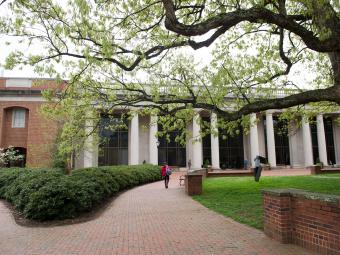
Higher education leaders across the nation are investing time and money into digital transformation. But many face a common problem: How do we create sustainable, strategically driven change? Davidson College accelerated digital transformation by building a team; Kuali Build has been an instrumental software in their success.